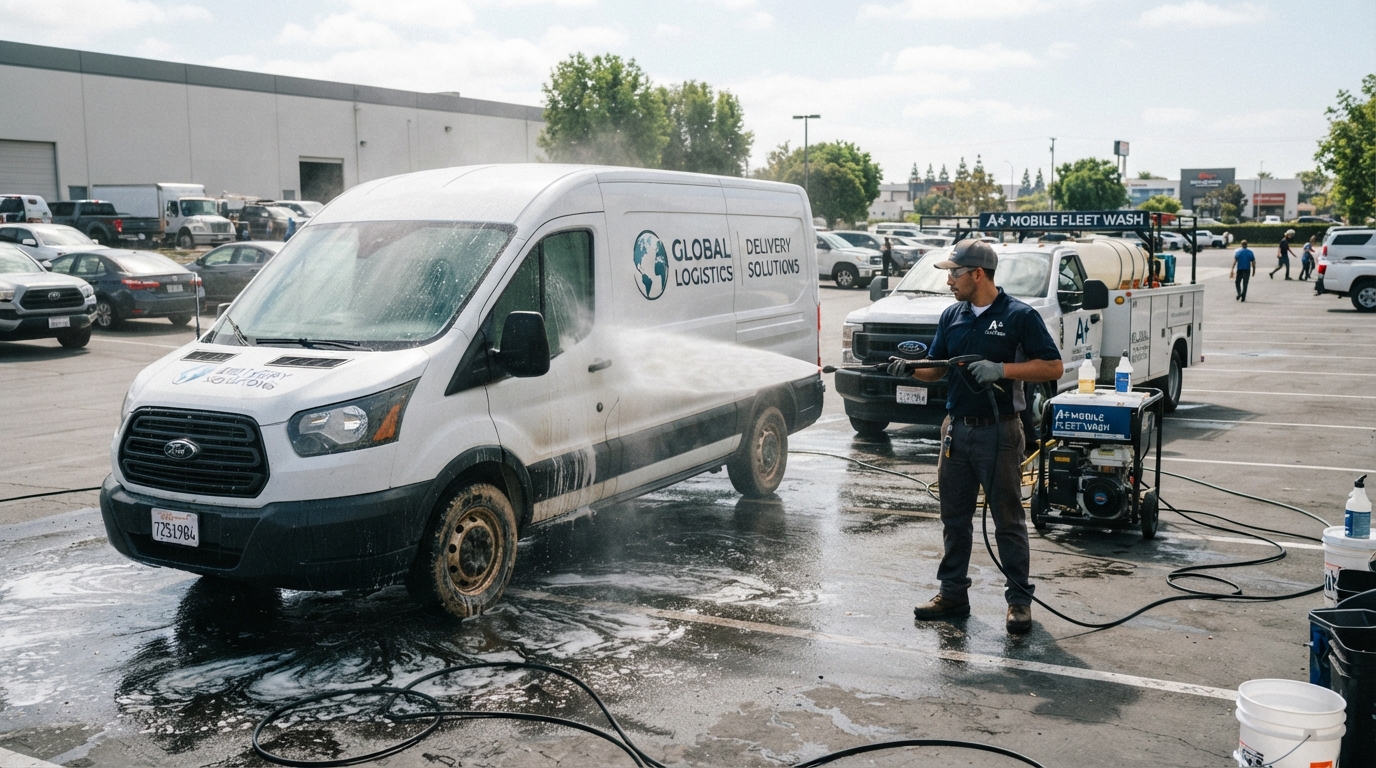
A fleet manager for a delivery company finds your mobile detailing service online. They call to ask about pricing for a fleet of 18 vehicles. You are in the middle of detailing a truck and the call goes to voicemail. The fleet manager does not leave a message — they call the next detailer on the list. By the time you call back two hours later, they have already booked a first detail with someone else.
This scenario plays out every day for mobile fleet detailing companies. The problem is not a lack of demand. The problem is that inquiries arrive while you are working, quotes sit unanswered, and follow-up falls through the cracks. This guide walks owners and operations teams through a practical marketing automation system designed to respond faster, follow up consistently, and nurture recurring commercial accounts — without spam, fabricated results, or replacing the human relationships that close fleet contracts. For a broader marketing and follow-up system, see our fleet detailing growth system.
Where Fleet Detailing Leads Come From
Before building any follow-up system, it helps to understand where fleet detailing inquiries typically originate. Recognizing your lead sources lets you prioritize response and tailor your follow-up.
- Search and local SEO — Fleet managers search "fleet detailing near me" or "mobile truck detailing [city]" when they need a new vendor.
- Referrals — A current fleet manager recommends you to a colleague at another company.
- Google Ads — Paid campaigns targeting fleet-related keywords bring in active buyers.
- Social media — Photos of clean fleets on your business page can prompt direct messages.
- Direct calls — Repeat contacts from fleet managers who used you months ago and need service again.
Each source has a different urgency. A Google Ads click is a hot lead ready to buy today. A social media message may be early-stage curiosity. Your system should respond quickly to all of them, but qualify and prioritize accordingly.
Responding Fast Without Dropping the Detail You Are Working On
The first challenge for mobile detailers is simple: you cannot answer the phone while your hands are covered in wax. But fleet managers expect a fast response. If they do not hear back within an hour, many move on.
A practical response system handles this in layers:
- 1Missed-call text-back — If a call goes unanswered, the caller receives an automatic text identifying your business and offering to collect details or schedule a callback.
- 1Inquiry form auto-reply — Website quote requests get an instant confirmation email or text with next steps.
- 1Business-hours routing — During working hours, urgent calls can ring to a second line or a designated team member who is not actively detailing.
The goal is not to replace conversation with automation. It is to acknowledge every inquiry quickly so the prospect knows you received it and knows what happens next.
Sample Missed-Call Text
"Hi, this is [Company Name]. Sorry we missed your call — we are detailing a fleet right now. Text us your fleet size and location, and we will send a quote within the hour. Or reply with a good time to call you back."
Qualifying Fleet Accounts Early
Not every inquiry is worth pursuing. Some callers have a single vehicle. Others have a fleet of 50 but want a price that is below your break-even. Qualifying early saves time for everyone.
A simple qualification checklist covers the essentials:
- Fleet size — How many vehicles need detailing?
- Vehicle types — Box trucks, vans, sedans, or mixed?
- Location — Where are the vehicles parked? Is it within your service area?
- Frequency — One-time detail, or recurring weekly/monthly?
- Timeline — When do they need the first detail?
- Decision-maker — Is the caller the fleet manager or an assistant gathering quotes?
Collecting this information through a short text exchange, a web form, or a brief call helps you decide whether to prepare a quote, schedule a walkthrough, or politely decline.
Quote Follow-Up That Does Not Feel Like Spam
Sending a quote and waiting is where most fleet detailing opportunities stall. The fleet manager gets busy, compares three quotes, and forgets about yours. A structured follow-up sequence keeps your quote top of mind without being pushy.
Sample Quote Follow-Up Sequence
- 1Day 1 (SMS) — "Hi [Name], here is the quote for your fleet of [X] vehicles. Let me know if you have any questions or want to adjust the scope. [link]"
- 1Day 3 (Email) — "Following up on the quote I sent. Would a recurring weekly or monthly schedule work better for your team? I can hold a slot for you."
- 1Day 5 (SMS) — "Hi [Name], just checking in. Happy to schedule a first detail this week if it works for you. What day is best?"
- 1Day 7 (Email) — "I wanted to make sure you received the quote. If timing is the issue, we can start with a single detail and move to a recurring plan after. [link]"
- 1Day 14 (SMS) — "Hi [Name], I will close out this quote at the end of the week. If you are still interested, reply here and I will keep it active."
Each message is short, specific, and gives the prospect an easy way to respond. The sequence stops as soon as they reply, book, or ask to stop. The same automated follow-up principles that help junk removal companies stay organized apply here — consistency without overwhelming the prospect.
Recurring-Service Reminders
For fleet managers who sign up for recurring details, the relationship does not end when the contract starts. Recurring-service reminders keep the schedule full and reduce no-shows.
Sample Recurring Reminders
- 2 days before: "Hi [Name], your fleet detail is scheduled for [day] at [time]. Please ensure vehicles are accessible. Reply C to confirm or R to reschedule."
- Day of: "We are on our way to detail your fleet. ETA [time]. See you shortly!"
- After completion: "Your fleet is done. Photos are attached. Next detail is [date]. Reply to adjust."
These reminders reduce missed appointments and reinforce the reliability that fleet managers value most. You can set up a similar process with our appointment booking automation.
Nurturing Multi-Contact Commercial Accounts
Many fleet accounts involve multiple decision-makers — a fleet manager, an operations director, and sometimes an owner. Your system should keep all relevant contacts informed without overwhelming any single person.
A practical approach:
- Log every contact associated with the account in your CRM.
- Send the quote and follow-up to the primary contact, and cc the operations director on key milestones.
- After the first detail, send a summary to all contacts with photos and a recurring-plan recommendation.
- Keep a note of each contact's role so future communications go to the right person.
This level of organization is what separates a one-person detailer from a business that can manage multiple fleet accounts simultaneously.
Review Requests After Completed Work
Reviews from fleet managers signal reliability to other fleet managers. After each completed detail, send a simple, genuine review request — no incentives, no gating, no pressure.
Sample Review Request
"Hi [Name], your fleet looks great today. If you are happy with the work, a quick Google review would mean a lot to other fleet managers considering us. It takes about 30 seconds: [link]. Thank you!"
Follow up once after three days if no review is left, then stop. Genuine reviews that describe punctuality, quality, and professionalism support your local visibility and build trust with prospective fleet accounts. The same review-request principles outlined in our Google reviews guide for commercial cleaning apply — ask honestly, never incentivize.
Responsible Consent and Opt-Out Guidance
When sending SMS or email sequences, it is important to follow responsible messaging practices. This section provides general guidance, not legal advice. Consult a qualified professional for regulations that apply to your business and jurisdiction.
- Identify your business — Every message should clearly state who is contacting them.
- Obtain consent — Only message prospects who have initiated contact or opted in. Do not add numbers from purchased lists.
- Honor opt-outs immediately — If a prospect replies STOP, UNSUBSCRIBE, or asks to stop, remove them from all sequences right away.
- Avoid excessive messaging — Space out your follow-ups and stop after a reasonable number of touches.
- Do not use deceptive urgency — Phrases like "Final notice" on a first follow-up are misleading. Be honest about where the prospect is in the sequence.
CRM Pipeline Stages for Fleet Detailing
A simple CRM pipeline keeps every fleet opportunity organized and visible:
- 1New Inquiry — Call, form, or message received.
- 1Qualified — Fleet size, location, and frequency confirmed.
- 1Quote Sent — Pricing delivered to the fleet manager.
- 1Follow-Up Active — Automated sequence running.
- 1First Detail Scheduled — Appointment booked on the calendar.
- 1Recurring Contract — Ongoing weekly or monthly plan active.
- 1Lost / On Hold — Prospect declined or paused — keep for future re-engagement.
Each stage should have a clear next action so nothing falls through the cracks.
Metrics Worth Tracking
You do not need a complex dashboard. A handful of metrics tells you whether the system is working:
- Response time — How quickly does a new inquiry get acknowledged?
- Quote-to-first-detail rate — Of quotes sent, how many result in a first detail?
- First-detail-to-recurring rate — Of one-time details, how many convert to recurring contracts?
- Recurring retention rate — How many recurring accounts are still active after 90 days?
- Review rate — Of completed details, how many produce a Google review?
Track these weekly. If response time slips or quote-to-first-detail rate drops, you know where to focus.
Human Handoff: When Automation Steps Aside
Automation handles acknowledgment, qualification, follow-up, and reminders. But fleet contracts are built on relationships. Your system should hand off to a human at the right moments:
- When a fleet manager asks a question the system cannot answer.
- When a quote needs negotiation or custom pricing.
- When a recurring account is at risk of churning.
- When a large fleet (20+ vehicles) requires a site visit or walkthrough.
The goal is to free your team from repetitive tasks so they can focus on the conversations that close and retain contracts. Automation does not replace relationships — it creates the space for them.
30-Day Implementation Plan
Week 1: Response and Capture
- Set up missed-call text-back with a clear, branded message.
- Create an inquiry form auto-reply for website quote requests.
- Define your qualification questions (fleet size, location, frequency).
Week 2: Quote Follow-Up
- Build a 5-step quote follow-up sequence in your CRM.
- Test the sequence internally with a sample account.
- Set opt-out handling so STOP replies remove the contact automatically.
Week 3: Recurring Reminders and Reviews
- Create recurring-service reminder templates (2-day, day-of, post-completion).
- Set up a review request that sends after each completed detail.
- Define the follow-up cadence for no-response reviews (one reminder, then stop).
Week 4: Pipeline and Metrics
- Set up CRM pipeline stages from New Inquiry through Recurring Contract.
- Identify the five metrics you will track weekly.
- Review the first month of activity and adjust sequences as needed.
Implementation Checklist
- [ ] Missed-call text-back active and branded
- [ ] Inquiry form auto-reply configured
- [ ] Qualification questions defined
- [ ] Quote follow-up sequence built and tested
- [ ] Opt-out handling verified
- [ ] Recurring-service reminders created
- [ ] Review request sequence active
- [ ] CRM pipeline stages configured
- [ ] Weekly metrics identified and tracking started
- [ ] Human handoff rules documented
Getting Started
Marketing automation for mobile fleet detailing is not about replacing the human side of your business. It is about building a system that responds consistently, follows up reliably, and keeps every fleet opportunity organized — so your team can focus on delivering quality work and building the relationships that turn one-time details into recurring contracts.
If you want help building and managing this system, explore our automation capabilities, review the results we track, browse our service areas, or contact us to request a Free Lead-Loss Audit and see where fleet opportunities may be slipping through the cracks in your current process.