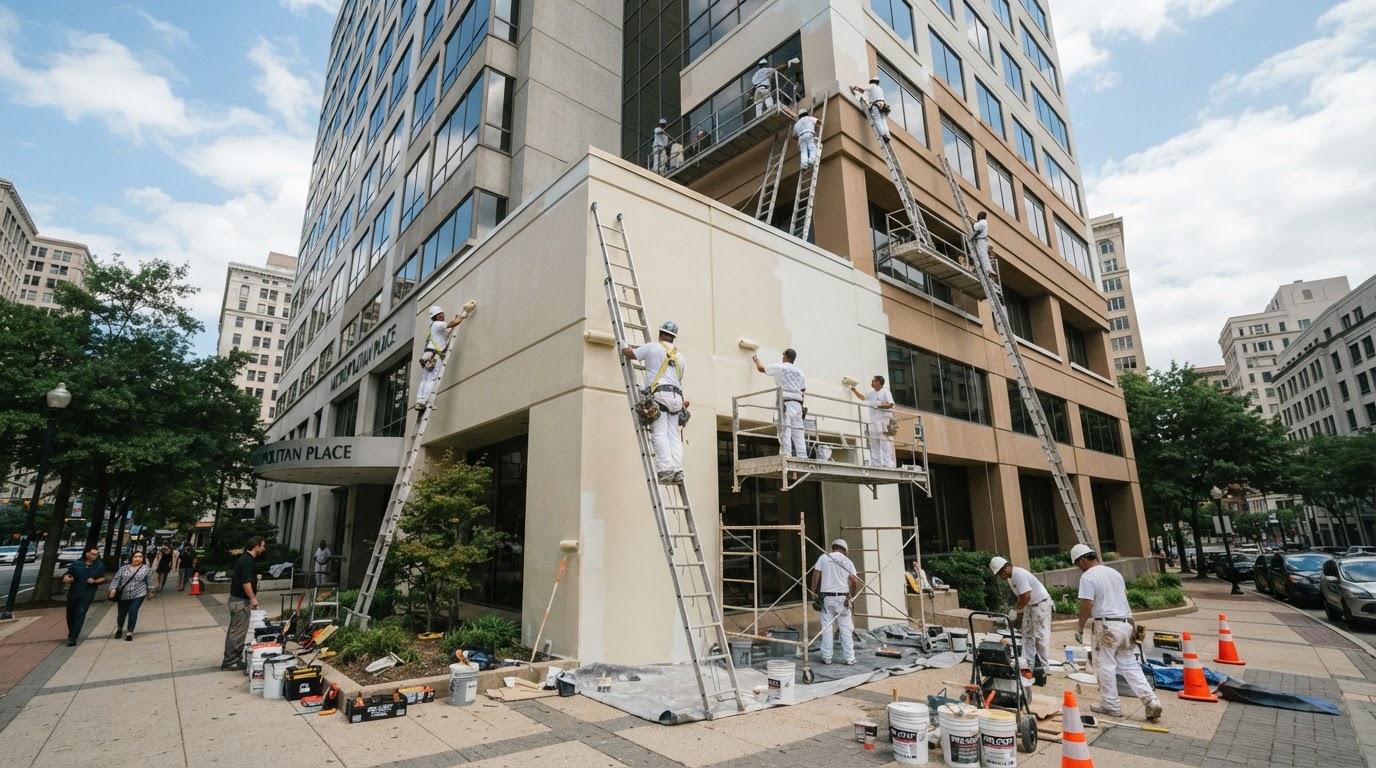
A property manager in Austin has a 40,000-square-foot office building that needs repainting before new tenants move in. They search "commercial painting contractor Austin" on Google, find three companies, and call each one. The first goes to voicemail. The second answers but cannot schedule a site visit for two weeks. The third answers, asks the right questions, and books a walkthrough for Thursday. That third company is the one most likely to win the job — not because they are the cheapest, but because they responded quickly and professionally.
This is the reality of commercial painting lead generation in Central Texas. The companies that consistently win contracts are not necessarily the ones with the best prices. They are the ones that show up in search results, answer the phone, qualify the opportunity, and follow up on the bid. This guide walks painting contractors and business-development teams through a practical, step-by-step approach to generating and converting more commercial painting opportunities in Central Texas — without fabricated statistics, guaranteed outcomes, or keyword stuffing. For a broader marketing and follow-up system, see our commercial painting growth system.
Who Buys Commercial Painting in Central Texas
Understanding who your buyers are and how they search is the foundation of any lead generation effort. Commercial painting buyers in Central Texas typically fall into a few categories.
Property managers and facility managers are the most common buyers. They oversee multiple buildings and need painting contractors who can handle recurring maintenance, tenant improvements, and full-building repaints. They search for reliability, clear communication, and a contractor who follows through on schedule.
Business owners preparing a new commercial space — a retail storefront, a restaurant, a warehouse — often need painting as part of a build-out or renovation. They usually find contractors through search, referrals, or their property management company.
General contractors and construction managers sometimes hire painting subcontractors for larger projects. These relationships are built through networking, past performance, and referrals.
Each buyer type searches differently and has different priorities. Your lead generation strategy should account for all of them rather than relying on a single channel.
Commercial vs Residential Positioning
One of the most common mistakes painting companies make is trying to serve both commercial and residential markets with the same messaging. Commercial and residential painting are different businesses with different buyers, different sales cycles, and different project sizes.
A homeowner searching "house painters near me" wants a different service, at a different price point, with different expectations than a facility manager searching "commercial painting contractor Austin." If your website, ads, and Google Business Profile all speak to both audiences, you dilute your message and attract unqualified leads.
How to Position Clearly
- Use "commercial painting" in your website headlines and service pages, not just "painting contractor."
- Showcase commercial project types: warehouses, office buildings, retail storefronts, industrial facilities.
- Write your Google Business Profile description around commercial services and service-area businesses.
- Use ad copy that speaks to property managers, not homeowners.
Clear positioning helps the right buyers find you and reduces wasted time on residential inquiries that do not fit your business model.
Local SEO for Commercial Painting
Local SEO helps your painting company appear when property managers search for commercial painting services in your area. It is a long-term investment, not an overnight fix, but it is one of the most cost-effective ways to generate leads over time.
Google Business Profile
Your Google Business Profile is often the first thing a property manager sees when they search for a commercial painter. Optimize it by choosing the right primary category (such as "Painter" with commercial services listed), writing a clear description focused on commercial work, adding photos of commercial projects (without fabricating client names), keeping your service areas accurate, and encouraging genuine reviews from commercial clients.
Service Pages and Coverage Content
Create dedicated pages for the commercial painting services you offer — interior commercial painting, exterior painting, industrial coatings, warehouse painting, retail storefront painting. Each page should describe the service, the types of properties you work on, and what a property manager should expect during the process.
For coverage, avoid cloning thin city pages with only the city name changed. Instead, write genuinely useful content about the areas you serve. For example, our Austin service-area page explains how Brainify helps commercial service businesses in Austin and nearby communities. If you serve multiple metros, create original, substantive content for each one rather than duplicating paragraphs.
Local Citations and NAP Consistency
Ensure your business name, address, and phone number (NAP) are consistent across your website, Google Business Profile, and local directories. Inconsistent NAP information can confuse search engines and reduce your local visibility.
Google Ads for Faster Visibility
While local SEO builds over months, Google Ads can put your company at the top of search results immediately. For commercial painting companies that need leads now, paid search is a practical complement to organic efforts.
Campaign Structure Tips
- Create a dedicated campaign for commercial painting — do not mix it with residential.
- Use ad groups organized by service type: warehouse painting, office building painting, industrial coatings, retail storefront painting.
- Target commercial keywords: "commercial painting contractor," "warehouse painting," "industrial painting services," "office building painters."
- Add negative keywords: residential, home, house, DIY, cheap, jobs, employment.
- Use geographic targeting limited to the areas you actually serve.
Pair your ads with a dedicated landing page — not your homepage — that matches the ad message and makes it easy for a property manager to call or request a quote. Track every call and form submission so you know which keywords generate real commercial opportunities.
Referral and Partner Outreach
Referrals remain one of the strongest lead sources for commercial painting, but you can be intentional about generating them rather than waiting passively.
Build Relationships With
- Property management companies that oversee multiple buildings and need reliable contractors.
- General contractors who hire painting subcontractors for commercial build-outs.
- Commercial real estate brokers who connect tenants with service providers.
- Other trades — flooring, HVAC, cleaning — whose clients often need painting before or after their work.
Reach out with a brief introduction, photos of commercial work you have completed, and a clear offer to provide a free estimate. Do not fabricate client names or project details. If you are early in your commercial painting business, focus on the quality of your work and your responsiveness.
Proof and Portfolio Content
Property managers want evidence that you can handle their building. Portfolio content — photos, project descriptions, and case studies — builds trust before the first conversation.
What to Include
- Before-and-after photos of commercial projects (without exposing confidential client information).
- Project descriptions that explain the scope, timeline, and challenges — without naming the client if confidentiality applies.
- A short list of commercial property types you have experience with.
- Any relevant certifications, licenses, or safety training — only if genuinely held.
Do not invent clients, testimonials, or results. If you are building your portfolio, focus on the quality of your work and your process. Honest content attracts the right buyers and sets accurate expectations.
Lead Qualification
Not every inquiry is a qualified commercial opportunity. A simple qualification process helps your team focus on real projects and avoid wasting time on calls that will not convert.
Qualification Questions
- Is this a commercial property or a residential home?
- What type of building is it (office, warehouse, retail, industrial)?
- What is the approximate square footage?
- Is this a one-time project or recurring maintenance?
- What is the timeline for starting work?
- Who is the decision-maker — the property manager, business owner, or general contractor?
Capturing this information early — whether through a form, a phone call, or an automated intake process — helps you prioritize follow-up and prepare an accurate estimate.
Estimate Follow-Up
Submitting a bid is not the end of the sales process. In commercial painting, the gap between submitting an estimate and signing a contract can be weeks. During that time, the property manager is comparing bids, getting internal approvals, and dealing with other priorities. Consistent follow-up keeps you top of mind.
A Simple Follow-Up Cadence
- Day 1: Send the estimate with a personalized note referencing the site visit.
- Day 3: Check in to answer any questions about scope or pricing.
- Day 7: Share a relevant project photo or brief case description.
- Day 14: Ask about next steps and offer to adjust the scope if needed.
- Day 21: Final follow-up — keep it brief and professional.
Not every bid will close, but consistent, respectful follow-up improves your close rate without being pushy. The goal is to stay present so that when the property manager is ready to decide, your company is the one they think of first. You can automate this process with our commercial bid follow-up system.
Tracking Sources and Pipeline
If you do not know where your leads come from, you cannot improve your lead generation. Track every inquiry by source — organic search, Google Ads, referral, direct call, website form — and monitor which sources produce the most qualified opportunities and signed contracts.
A simple pipeline — New Inquiry → Qualified → Site Visit Scheduled → Estimate Sent → Follow-Up → Won/Lost — helps you see where opportunities stall and where to focus improvement. You can learn more about how we think about measurable results and pipeline tracking.
Seasonal Considerations
Commercial painting in Central Texas has seasonal patterns. Exterior painting is more common in spring through fall when weather allows. Interior painting happens year-round but may spike during tenant improvements and build-outs. Understanding these patterns helps you plan your marketing and crew scheduling.
During slower seasons, invest in SEO content, portfolio updates, and referral outreach. During busier seasons, focus on lead capture, qualification, and fast response so you do not lose opportunities while your crews are in the field.
30-Day Action Plan
A practical plan to start improving your commercial painting lead generation in Central Texas:
Week 1: Foundation
- Audit your website messaging — is it clearly positioned for commercial painting?
- Update your Google Business Profile: categories, services, service areas, photos.
- Ensure your NAP is consistent across all directories.
- Set up call and form tracking if you do not already have it.
Week 2: Visibility
- Create or update service pages for each commercial painting service you offer.
- Write original, useful content about the Central Texas areas you serve.
- Launch a Google Ads campaign targeting commercial painting keywords with negative keywords for residential.
- Build a dedicated landing page for ad traffic.
Week 3: Capture and Qualify
- Define your qualification questions and train your team or set up an intake process.
- Review your phone answering process — how quickly are commercial calls answered?
- Set up a simple follow-up cadence for every estimate you send.
Week 4: Outreach and Optimization
- Reach out to 5–10 property management companies or general contractors in your area.
- Update your portfolio with recent commercial project photos.
- Review your lead sources and pipeline — where are opportunities stalling?
- Adjust your ad targeting and negative keywords based on the first two weeks of data.
Implementation Checklist
- [ ] Website clearly positions your company as a commercial painting contractor
- [ ] Google Business Profile optimized for commercial services
- [ ] NAP consistent across all listings
- [ ] Service pages created for each commercial painting service
- [ ] Original coverage content for areas you serve (no cloned city pages)
- [ ] Google Ads campaign targeting commercial keywords with negative keywords
- [ ] Dedicated landing page for ad traffic
- [ ] Call and form tracking in place
- [ ] Qualification questions defined and used consistently
- [ ] Estimate follow-up cadence established
- [ ] Lead sources and pipeline tracked
- [ ] Portfolio content updated with genuine commercial project photos
- [ ] Referral outreach started with property managers and general contractors
Getting Started
Lead generation for commercial painting is not about a single tactic. It is about building a system that consistently captures inquiries, qualifies them, follows up on bids, and tracks results. Whether you are just starting to focus on commercial work or you want to improve an existing process, the principles in this guide give you a practical framework.
If you want help building and managing a connected lead generation system for your commercial painting company, contact us or request a Free Lead-Loss Audit to see where opportunities may be slipping through the cracks in your current process.