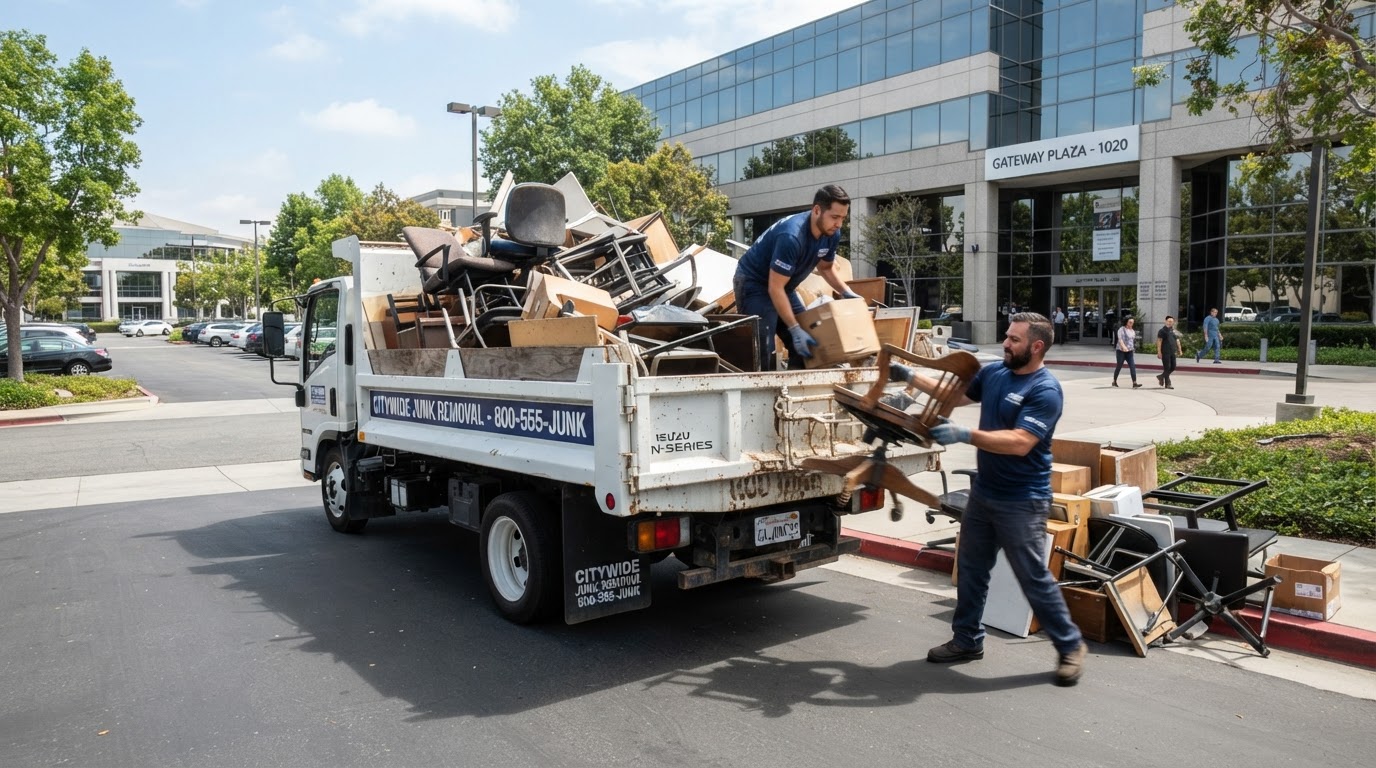
A property manager emails your junk removal company for a quote on clearing out a warehouse. You reply with pricing. They say they need to check with their team. A week goes by. You get busy with other jobs and forget to follow up. The opportunity quietly disappears — not because the prospect was not interested, but because nobody stayed in touch.
This is one of the most common ways commercial junk removal companies lose opportunities. The quote was reasonable, the prospect was qualified, and the need was real. What was missing was a consistent, organized follow-up process that kept the conversation moving without requiring someone to remember every detail manually.
This guide walks owners, sales teams, and office managers through a practical follow-up system designed for commercial junk removal companies. It covers lead sources, segmentation, message sequences, quote follow-up, long-cycle property-manager relationships, compliance basics, pipeline tracking, and a realistic 30-day rollout plan. The goal is simple: help you follow up consistently and professionally so fewer opportunities slip away. For a broader marketing and follow-up system, see our junk removal growth system.
Where Commercial Junk Removal Leads Come From
Commercial junk removal leads arrive from several channels, and each one has a different context:
- Phone calls — A facility manager calls directly, often with an immediate need such as an estate cleanout, tenant move-out, or construction debris removal.
- Website forms — A property management company submits a quote request through your website, sometimes with photos or a description of the volume.
- Google Business Profile — A prospect finds you on Google Maps and clicks to call or request directions.
- Referrals — A previous client recommends you to another property manager or contractor.
- Email inquiries — A commercial real estate agent or broker emails about a property they are preparing for sale or lease.
Each source carries different expectations. A phone call usually means the prospect wants a quick answer. A website form might mean they are comparing multiple companies. Understanding the source helps you prioritize your response.
Setting Response Priorities
Not every lead needs the same speed of response, but every lead deserves a timely one. A simple priority framework helps your team know what to handle first:
- High priority — Emergency cleanouts, construction deadlines, tenant move-outs with a lease expiration date. Respond within hours, not days.
- Medium priority — Scheduled property cleanouts, warehouse clearing, or recurring service inquiries. Respond within one business day.
- Low priority — General information requests, future planning inquiries, or past clients checking if you are still available. Respond within two business days.
When you respond quickly, you signal reliability — something property managers value deeply when choosing a contractor.
Segmenting Leads by Job Type and Urgency
Segmentation is the foundation of a good follow-up system. Instead of treating every lead the same way, you group them by what they need and when they need it. This lets you send relevant messages instead of generic ones.
Job Type Segments
- One-time cleanout — Office, warehouse, or retail space clearing. Follow up with scheduling availability and a clear quote.
- Construction debris — Post-construction or renovation cleanup. Follow up with capacity details and timeline.
- Recurring service — Apartment complexes, office buildings, or property management portfolios. Follow up with recurring pricing and service-level options.
- Estate or foreclosure — Time-sensitive, often coordinated with agents or attorneys. Follow up with flexibility and discretion.
Urgency Segments
- Immediate — Deadline-driven. Short follow-up intervals (1–3 days).
- Standard — No hard deadline. Medium follow-up intervals (3–7 days).
- Long-cycle — Planning ahead or budgeting for next quarter. Longer intervals (1–4 weeks).
When you combine job type and urgency, you can send the right message at the right time without overwhelming the prospect.
Building Your Follow-Up Sequences
A follow-up sequence is a series of messages sent at planned intervals. The goal is to stay present in the prospect's mind without being pushy or repetitive. Here are practical sequences you can adapt.
Sequence 1: Quote Follow-Up (7-Day)
Trigger this sequence when you send a quote to a property manager:
- 1Day 1 (SMS): "Hi [Name], thanks for considering [Company] for the junk removal at [property]. Here is your quote: [link]. Happy to answer any questions."
- 1Day 3 (Email): "Following up on your quote. We can schedule the removal as early as [date]. Want me to hold that slot for you? Reply here or call [number]."
- 1Day 5 (SMS): "Hi [Name], checking in. We have availability next week if you would like to move forward. Reply here or call [number]."
- 1Day 7 (Email): "Last follow-up on your quote. If the timing is not right, no worries — we are here whenever you need us. If anything changes, just reply to this email."
Sequence 2: Recurring Service Nurture (30-Day)
For property managers who may need ongoing junk removal at multiple properties:
- 1Week 1: Introduce recurring service options with clear, simple pricing.
- 1Week 2: Share a brief example of a similar property you service (without naming the client or sharing confidential details).
- 1Week 3: Offer a discounted first service or a walk-through of one of their properties.
- 1Week 4: Final check-in with a simple summary of what recurring service includes.
Sequence 3: No-Response Workflow
When a prospect has not replied after the quote sequence ends:
- 1Week 2: "Hi [Name], I know things get busy. If you are still considering options for [property], I am happy to answer any questions or adjust the quote. No pressure either way."
- 1Week 4: Move to a long-cycle nurture list. Send a brief check-in once a month. Do not continue daily or weekly messages — that becomes spam.
Long-Cycle Property-Manager Relationships
Some opportunities take months. A property manager might be budgeting for next quarter, waiting for tenant turnover, or coordinating with a board. These relationships are not won with a single follow-up — they are built with consistent, low-pressure contact over time.
For long-cycle prospects, send a brief, useful message every 3–4 weeks. Share relevant content: a seasonal reminder, a tip for maintaining a property between cleanouts, or a note about a service you added. The goal is to stay present so that when the need becomes urgent, your company is the first one they think of.
Avoid artificial urgency in long-cycle follow-ups. Phrases like "last chance" or "offer expires tonight" feel manipulative when the prospect has no deadline. Be honest about timing and let the prospect decide.
Human Handoff
Automated follow-up does not replace your team. It supports them. When a prospect replies, asks a specific question, or requests a site visit, the system should hand the conversation to a human immediately.
A good handoff includes:
- The full conversation history so your team does not ask the prospect to repeat themselves.
- The original quote and any details the prospect shared.
- A clear note about where the prospect is in the process.
When the system handles the routine follow-up and your team handles the conversations that matter, the prospect gets a better experience and your team spends time on high-value work instead of remembering to send reminders.
Opt-Outs and Responsible Consent
Follow-up messages must be sent responsibly. This section provides general guidance, not legal advice. Regulations vary by region and channel, and you should obtain professional guidance to ensure your practices comply with applicable laws.
Practical Guidelines
- Identify your business — Every message should clearly state who is contacting them.
- Honor opt-outs immediately — If a prospect says stop or replies with words like "unsubscribe," "stop," or "opt out," remove them from active sequences right away.
- Avoid excessive messaging — Do not send multiple messages per day. Space your follow-ups reasonably.
- Do not use deceptive language — Do not imply urgency that does not exist or misrepresent the purpose of the message.
- Keep records — Track when and how consent was obtained for each contact.
If you are unsure about compliance requirements for SMS or email in your area, consult a qualified professional before launching automated sequences.
CRM Pipeline Stages
A simple pipeline helps you see where every opportunity stands and what needs to happen next. For commercial junk removal, a practical pipeline might look like this:
- 1New lead — Inquiry received, not yet contacted.
- 1Contacted — First response sent, waiting for a reply.
- 1Quoted — Price provided, follow-up sequence active.
- 1Site visit scheduled — Prospect wants to see the property or get an in-person estimate.
- 1Decision pending — Prospect is comparing options or checking with their team.
- 1Won — Job booked and scheduled.
- 1Lost — Prospect chose another company or decided not to proceed.
- 1Nurture — No immediate decision, kept on a long-cycle follow-up list.
When every opportunity has a clear stage, your team knows exactly what to do next instead of guessing. You can learn more about how we approach automated follow-up systems and how they fit into the broader process.
Metrics Worth Tracking
You do not need a complex dashboard to measure follow-up effectiveness. A few simple metrics tell you whether your system is working:
- Response rate — What percentage of leads receive a first response within your target time?
- Quote-to-booking rate — How many quotes result in a scheduled job?
- Follow-up completion rate — What percentage of quoted leads receive the full follow-up sequence?
- Re-engagement rate — How many past clients return for additional service within 6 months?
These numbers help you identify where opportunities are stalling and where to improve. You can see how we think about measurable results and what we track.
Implementation Checklist
Use this checklist to set up your follow-up system:
- [ ] Map your lead sources and response priorities
- [ ] Define job type and urgency segments
- [ ] Write SMS and email templates for each segment
- [ ] Set up a simple CRM pipeline with clear stages
- [ ] Configure automated sequences with appropriate intervals
- [ ] Add opt-out handling and consent tracking
- [ ] Create a human handoff process for replies and questions
- [ ] Define the metrics you will track weekly
- [ ] Train your team on the pipeline and handoff process
- [ ] Review and refine templates after the first 30 days
A Realistic 30-Day Rollout
**Days 1–7: Planning and templates.** Map your lead sources, define your segments, and write your message templates. Keep them short, clear, and professional. Review them with your team.
**Days 8–14: System setup.** Configure your CRM pipeline, set up your follow-up sequences, and test them with internal contacts. Make sure opt-outs work and the human handoff is smooth.
**Days 15–21: Soft launch.** Start running sequences for new leads only. Do not backfill old leads yet. Monitor response rates and adjust templates based on what you see.
**Days 22–30: Full launch and review.** Extend sequences to all new quotes. Review your metrics, gather feedback from your team, and refine your templates. Plan a monthly review going forward.
Start Following Up Consistently
A good follow-up system does not need to be complicated. It needs to be consistent. When every quote gets a timely, professional follow-up and every prospect receives a clear next step, fewer opportunities slip away. Your team can focus on the conversations that matter while the system handles the routine reminders.
If you want to see where your business might be losing opportunities — from missed calls to slow follow-up to gaps in your process — request a Free Lead-Loss Audit. We will review how your current lead response and follow-up are working and identify where improvements could help. We also serve companies across multiple service areas — if you want to see whether we work in your market, that page has the details.