When an HOA board or property management company needs a new landscaping contractor, the process usually starts the same way: someone searches Google for "commercial landscaping near me" or "HOA landscaping services [city]," scans the map results, and calls two or three companies that look credible. If your business does not appear in those results — or appears but does not look trustworthy — the opportunity goes to a competitor before you even know it existed.
This guide is for owners and business-development teams at commercial landscaping companies that want to win more HOA and property-management contracts. It walks through practical, honest local SEO steps: improving your visibility in the searches that matter, building trust with the people who make vendor decisions, and creating a system that turns more searches into real conversations. No ranking guarantees, no invented statistics — just a clear, practical approach. For a broader marketing and follow-up system, see our commercial landscaping growth system.
Local SEO does not win contracts by itself. But it puts you in the conversation. What happens after that — answering the call, showing up for the site walk, submitting a strong proposal, and following up consistently — is what closes the deal. This guide focuses on the first part: making sure you are found.
How HOA and Property Managers Search for Landscaping Vendors
Before diving into tactics, it helps to understand what an HOA board member or property manager actually does when they need a new landscaping contractor. Their process is usually straightforward:
- 1They search Google for something like "commercial landscaping [city]" or "HOA landscaping services."
- 1They look at the map results and the first page of organic listings.
- 1They check reviews, photos, and whether the business seems to handle commercial and HOA properties.
- 1They call two or three companies and go with the one that answers and sounds professional.
Your goal with local SEO is to show up in that search, look credible when they click through, and be ready to respond when they call. Every step in this guide maps to one of those four moments.
Google Business Profile for Service-Area Landscaping Businesses
Your Google Business Profile is one of the most visible representations of your company in local search. For commercial landscaping companies that serve a wide area rather than a single storefront, there are a few specifics worth getting right.
Use Your Real Business Name
Do not try to stuff keywords into your business name. "Greenway Commercial Landscaping" is fine. "Greenway Commercial Landscaping Austin TX Best HOA Lawn Care" is not. Google can penalize profiles that manipulate their name, and it looks unprofessional to the property managers reading it.
Choose Accurate Categories
Your primary category should reflect what you actually do — "Landscaper" or "Landscape Company" for commercial work. Add secondary categories like "Lawn Care Service," "Landscape Designer," or "Property Maintenance Company" if they genuinely apply. Accurate categories help Google match your profile to the right searches.
List Every Community You Serve
If you serve multiple communities across a metro area, list them all in your service areas. Google uses this information to decide which local searches to show your profile in. Omitting a community where you actively work means you are invisible to property managers searching from that area. You can see how we approach service areas on our own site — each market gets its own page with unique, useful content.
Keep Your Profile Active
Post updates regularly — photos of commercial installations, seasonal maintenance reminders, or recent project completions. An active profile signals to Google that your business is operational and engaged. It also gives property managers browsing your profile a sense of the work you do and the types of properties you handle.
Service and Coverage Pages That Actually Help
Your website should make it easy for both Google and potential clients to understand what you do and where you do it. Two types of pages matter most for commercial landscaping companies.
Service Pages
Create a dedicated page for each commercial service you offer: HOA common-area maintenance, apartment complex landscaping, office park grounds management, irrigation installation, seasonal color rotation, and so on. Each page should describe the service, explain what types of properties you work on, and include a clear way to request a bid or schedule a site walk. This helps Google match your site to specific service searches and gives property managers the information they need to decide whether to contact you.
Coverage Pages
If you serve multiple communities across a metro area, a coverage page that lists the areas you work in helps Google understand your service territory. Rather than cloning the same page for every city with only the name changed — which Google may treat as low-quality — write original content for the communities where you genuinely have a presence. Each page should describe the specific work you do in that area, the types of properties you maintain, and a clear way to get in touch.
Commercial Proof and Trust Signals
HOA board members and property managers are risk-averse. They need to justify their vendor choice to a board, an owner, or tenants. Your website and profile should give them the confidence to make that case. A few trust signals that carry real weight:
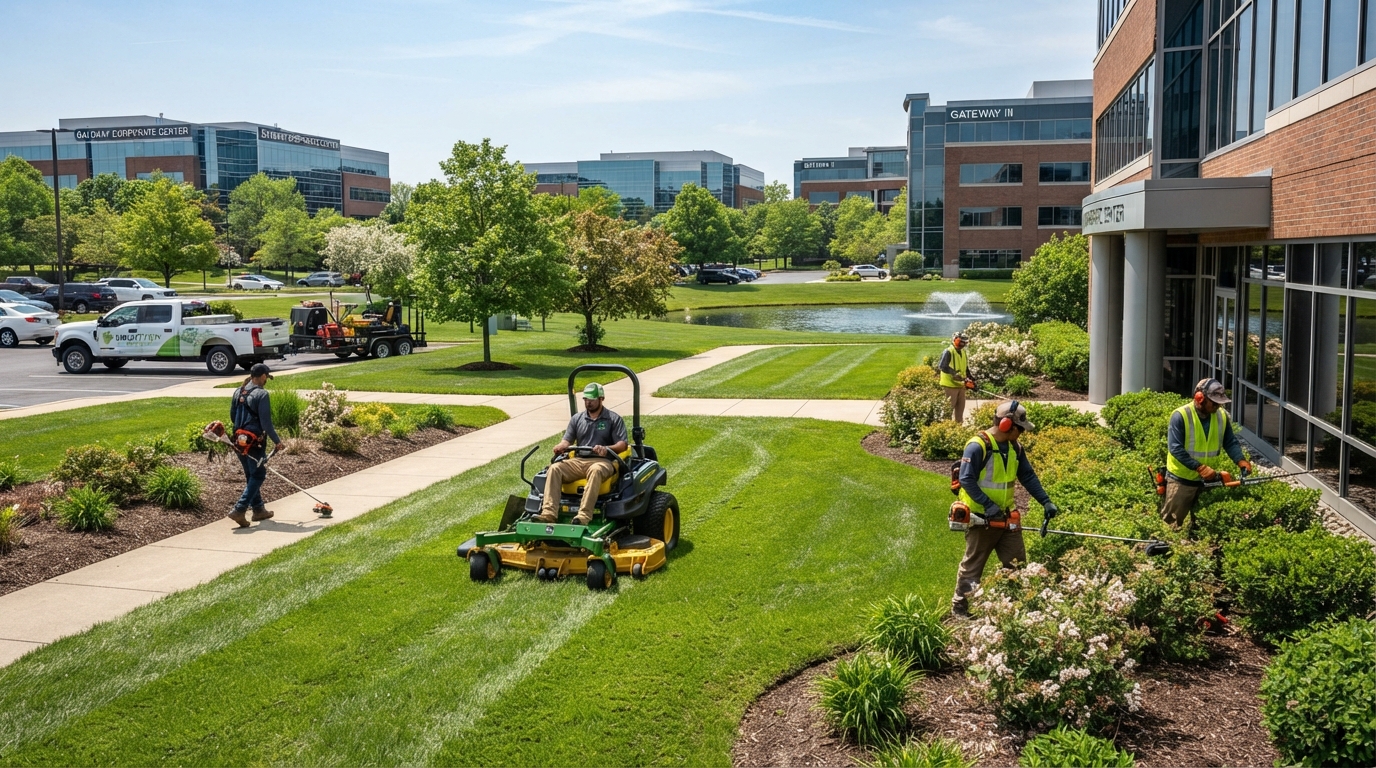
- Photos of commercial and HOA work — Show your team maintaining common areas, apartment entrances, office park walkways, and the types of properties your clients manage. A photo of a well-maintained HOA entrance is more persuasive than a paragraph of claims.
- Clear licensing and insurance information — State your license number, insurance coverage, and any certifications relevant to commercial landscaping work. Property managers need this information to add you to their approved vendor list.
- Professional, fast-loading website — A site that looks outdated or takes forever to load undermines your credibility before a conversation even starts.
- Consistent contact information — Your name, address, and phone number should match exactly across your website, Google Business Profile, and any directories. Inconsistencies can confuse both Google and potential clients.
Building a Review Profile Without Incentives
Reviews can contribute to local prominence and strongly influence customer trust and conversion. But the way you collect them matters. Here are practical guidelines:
- Ask after service, not before — The best time to request a review is right after you have completed a project or a contract renewal and the client is satisfied.
- Make it effortless — Send a text with a direct link to your Google review page. The fewer steps between the request and the review, the better.
- Encourage authentic descriptions — Ask clients to describe their genuine experience, the service they received, and what they valued about working with your company. Authentic reviews carry more weight with both Google and potential clients.
- Never offer incentives — Do not offer discounts, gifts, or payments in exchange for reviews. Google prohibits this, and savvy property managers can often spot incentivized reviews.
- Respond to every review — Thank clients for positive reviews and address concerns in negative ones professionally. Responding shows that you are engaged and care about your reputation.
Automated review request systems can help you collect reviews consistently without adding manual work for your team. Learn more about building a consistent review system — the same approach applies to landscaping.
Portfolio and Case-Study Content Without Exposing Clients
Publishing helpful content builds authority and gives property managers a reason to trust your expertise before they ever call. But you do not need to name clients or expose confidential contract details. A few content ideas that work well:
- Project descriptions without naming the client — "A 120-unit apartment community in [city] needed a full landscape renovation of the entrance and common areas. Here is what we did, how long it took, and the result." This gives proof without breaching confidentiality.
- Before-and-after photos — Pair each photo with a sentence about the property type, the challenge, and the solution. Visual proof is powerful for landscaping.
- Seasonal tips — Short articles on irrigation scheduling, seasonal color selection, or common HOA landscaping issues position you as a knowledgeable partner, not just a vendor.
The goal is not to publish content for its own sake. It is to give a property manager who is researching potential vendors a reason to believe you understand their needs.
Local Citations and Directory Consistency
Your business name, address, and phone number should be consistent across the web. Google cross-references directories, industry listings, and review sites to verify your business information. If your name or phone number varies between sources, it can undermine your local visibility.
Audit the major directories — Google Business Profile, Yelp, Bing Places, Apple Maps, and any industry-specific directories for landscaping or property maintenance. Make sure your information matches exactly. This is not glamorous work, but it matters.
Tracking Proposals and Leads
Local SEO only matters if it leads to actual business conversations. Without tracking, you are guessing which efforts are working. At minimum, you should know:
- How many calls and form submissions come from Google each month
- Which pages or profiles those contacts originated from
- How many of those contacts turn into site walks, proposals, or signed contracts
Call tracking — assigning a unique number to your Google Business Profile or website — lets you connect inbound calls to the source that generated them. This tells you whether your local SEO efforts are producing real commercial opportunities or just clicks. You can see how we track these metrics on our results page.
Seasonal Content That Keeps Your Profile Active
Commercial landscaping is seasonal. Property managers think about irrigation in the spring, color rotation in the summer, leaf cleanup in the fall, and frost protection in the winter. Publishing seasonal content keeps your website and Google Business Profile active year-round and gives property managers a reason to come back.
A simple seasonal calendar:
- Spring: Irrigation startup, mulch refresh, seasonal color installation
- Summer: Turf health, pest control, irrigation adjustments
- Fall: Leaf removal, aeration, winterization prep
- Winter: Pruning, frost protection, planning for spring renovations
Each season, write one short article and post one Google Business Profile update with a photo. This keeps your profile active and positions you as a knowledgeable partner.
A Practical 30-Day Plan
If you are starting from scratch or your local SEO has been neglected, do not try to do everything at once. Here is a realistic 30-day plan to build momentum.
Week 1: Foundation
- 1Claim and verify your Google Business Profile if you have not already
- 1Fill out every field: categories, services, service areas, hours, website, photos
- 1Audit your website for consistent name, address, and phone number
- 1Identify which commercial services deserve their own dedicated pages
Week 2: Content and Pages
- 1Write or update one service page for your most important commercial offering
- 1Create or update a coverage page listing the communities you serve with original content
- 1Add photos of recent commercial and HOA work to your website and Google Business Profile
- 1Write a short article answering a common question your commercial clients ask
Week 3: Reviews and Trust
- 1Set up an automated review request process (or create a manual system if needed)
- 1Identify three recent satisfied clients and send review requests
- 1Respond to every existing review on your Google Business Profile
- 1Add licensing, insurance, and certification information to your website
Week 4: Tracking and Refinement
- 1Set up call tracking on your Google Business Profile and website
- 1Review which pages are generating the most contact form submissions
- 1Post your first Google Business Profile update with a photo and short description
- 1Make a plan to post one update and request reviews weekly going forward
Final Checklist
Before you consider your local SEO foundation solid, make sure you have covered these essentials:
- Google Business Profile claimed, verified, and fully filled out
- Accurate primary and secondary categories selected
- All service-area communities listed on your profile
- At least one dedicated service page for your core commercial offering
- A coverage page listing the areas you serve with original content
- Consistent name, address, and phone number across your website, profile, and directories
- A system for requesting reviews after every commercial service or contract renewal
- Call or form tracking so you know which sources generate real opportunities
- A plan to post profile updates and request reviews on a regular schedule
- Seasonal content that keeps your profile active year-round
Local SEO for commercial landscaping is not a one-time project — it is an ongoing practice. But if you work through this guide steadily, you will give HOA boards and property managers a clear, credible way to find and contact your business when they need a new landscaping vendor.
If you would like help putting this system in place, Brainify Digital builds and manages the entire process — Google Business Profile optimization, service and coverage pages, automated review requests, call tracking, and consistent follow-up. Get your free lead-loss audit to find out where commercial opportunities are slipping away, or see the service areas we cover for more context on how we approach local visibility.