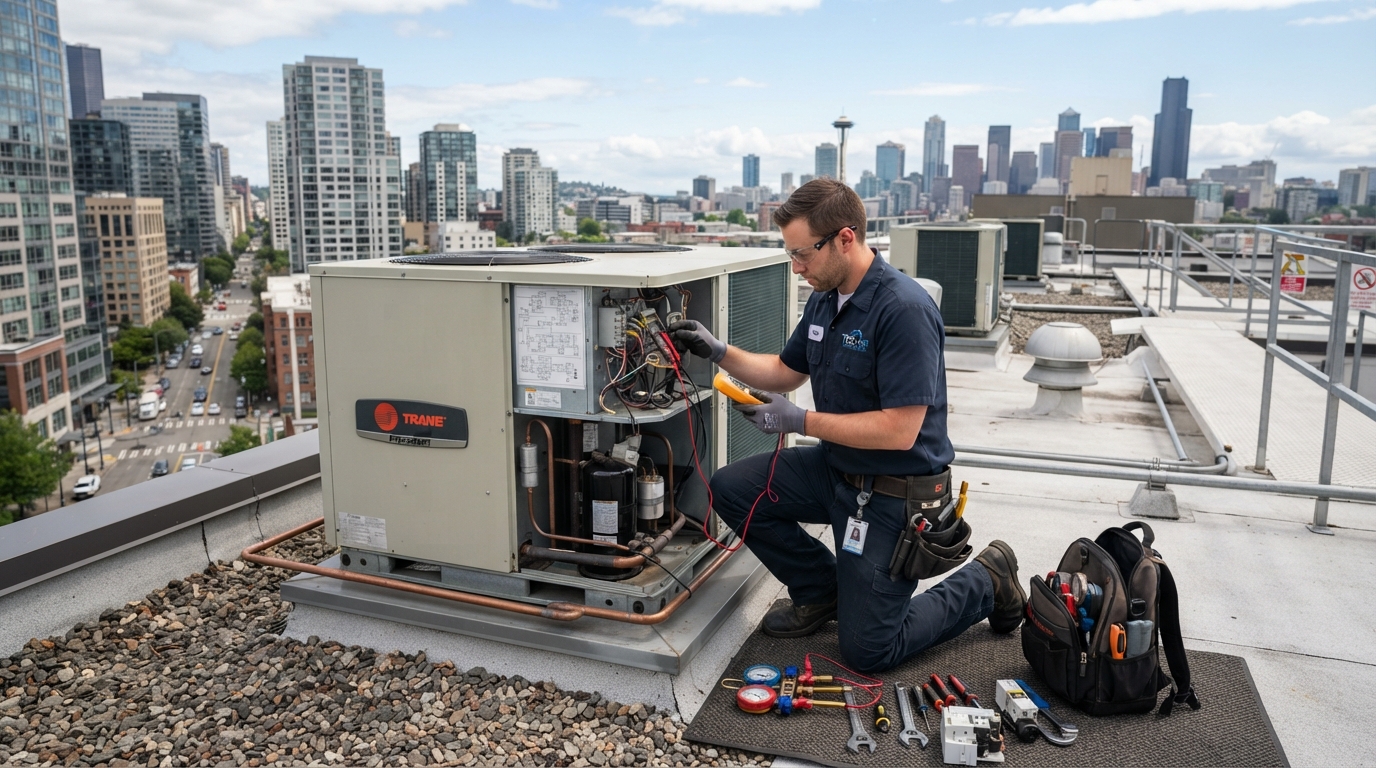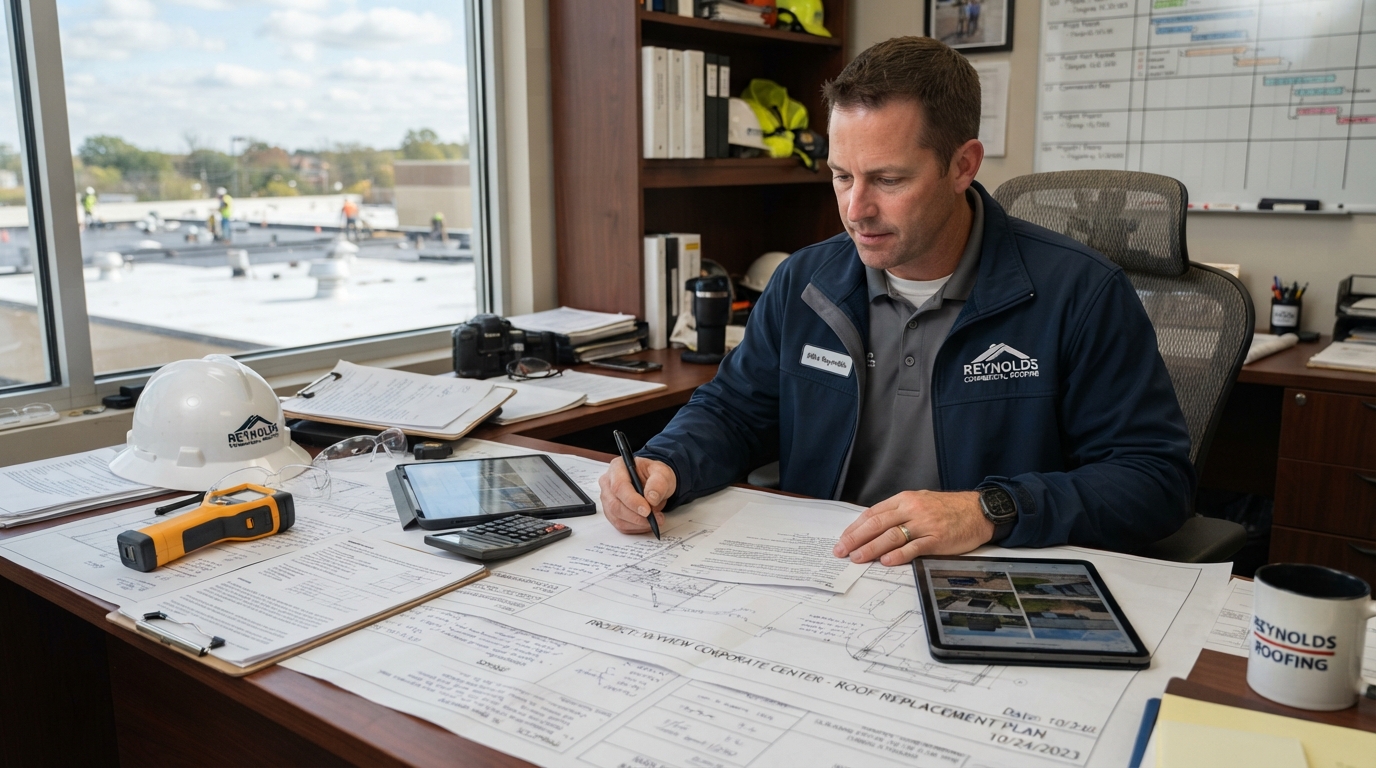
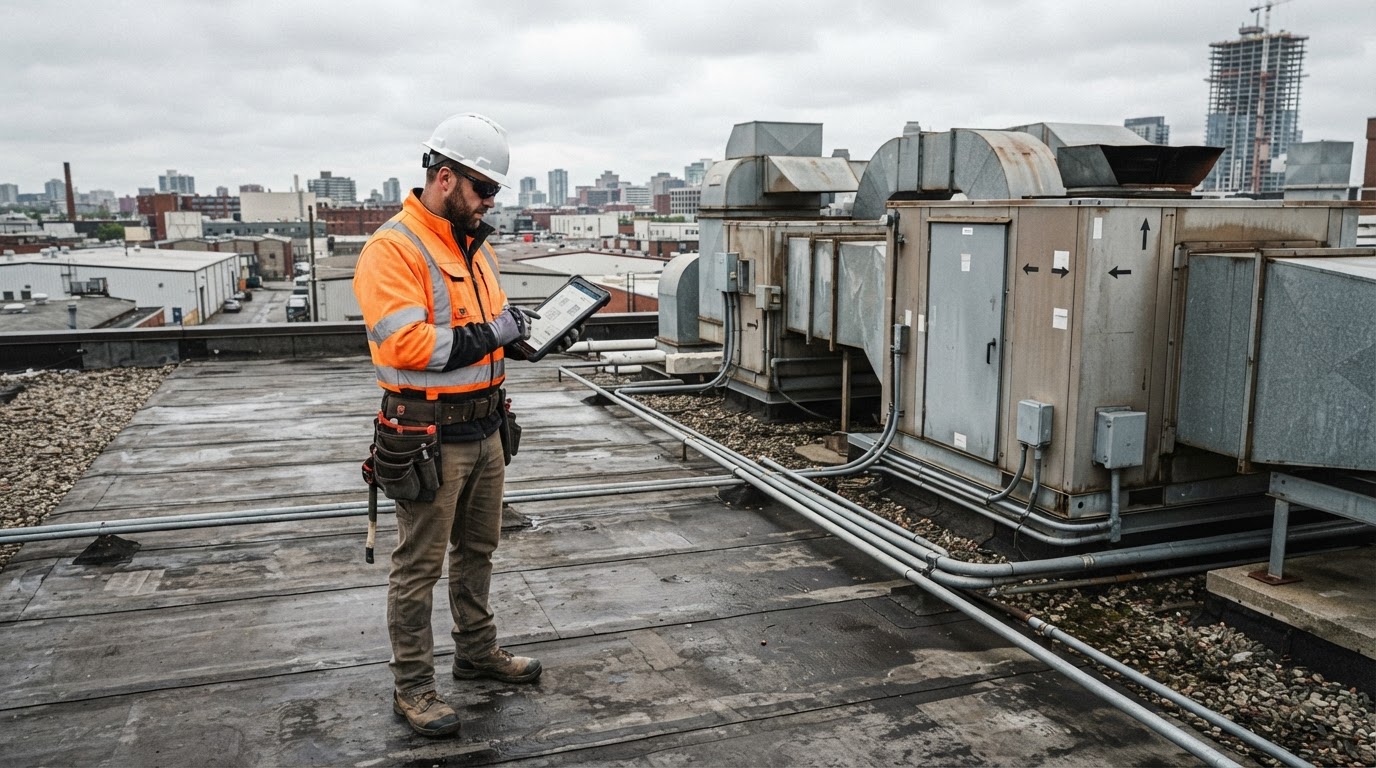
A property manager at a multi-tenant office park notices a water stain on a ceiling after a heavy rain. They search for a commercial roofing company, find your number, and call. Your crew is on a roof across town and the office line goes unanswered. The property manager does not leave a voicemail. They call the next company on the list.
That call was a quote request. It may have been a small repair or a full roof replacement — you will never know, because the opportunity is gone before you even realize the call happened.
This is one of the most common and most expensive leaks in a commercial roofing business. This guide explains how text-back messaging can help you respond quickly to missed calls, recover legitimate quote requests, and do it in a way that is responsible and compliant. For a broader lead generation and follow-up system, see our commercial roofing growth system.
Which Calls Are Appropriate for Text-Back
Not every missed call should get the same response. Before setting up text-back, it helps to understand the types of calls your roofing company receives and which ones text-back serves well.
**Routine quote requests** are the best fit. A property manager or building owner calls to ask about a roof inspection, a maintenance contract, or a bid for a replacement project. They want information and a next step. A quick text acknowledging the call and offering to schedule an inspection keeps the conversation going.
**Emergency leak calls** need a different approach. If a property manager reports an active leak, a text message is not enough — they need to reach a person who can dispatch a crew. Text-back can acknowledge the call and provide an emergency line, but it should escalate immediately rather than try to handle the situation through SMS alone.
**General inquiries** — questions about services, service areas, or availability — work fine with text-back. The goal is to keep the caller engaged until a team member can respond personally.
**Wrong numbers and spam calls** are not worth a text. If your system can identify obvious spam or repeated wrong numbers, exclude them from text-back to avoid unnecessary messages.
Immediate Versus After-Hours Workflows
The timing of the text-back matters. A call missed during business hours and a call missed at 11 PM require different responses.
During Business Hours
When a call goes unanswered during the workday, the text should be immediate — within seconds. The caller is actively looking for a roofer right now. If you do not respond, they will call the next company. The message should be brief, identify your business, and offer a clear next step.
Example — business hours text:
"Hi, this is [Company Name]. Sorry we missed your call! We're on a job site but want to help. Are you calling about a roof inspection, repair quote, or a new project? Reply here and we'll get right back to you."
After Hours
After-hours calls often carry more urgency. The text should acknowledge the time, set expectations, and provide a path for emergencies.
Example — after-hours text:
"Hi, this is [Company Name]. Our office is closed, but we received your call. If this is an emergency roof leak, call our emergency line at [number]. Otherwise, let us know what you need and we'll follow up first thing in the morning."
Emergency Leak Requests
For calls that appear to be emergencies — especially during storms or after hours — the text should prioritize getting the caller to a human quickly.
Example — emergency text:
"Hi, this is [Company Name]. If you have an active roof leak, please call our emergency dispatch line now: [number]. We have crews available for urgent repairs. If it is not an emergency, reply here and we will follow up during business hours."
Routing and Escalation
Text-back is not a replacement for human follow-up — it is a bridge that keeps the opportunity alive until a person can take over. A well-designed system routes messages based on what the caller says.
If the caller replies with "I need a quote for a flat roof replacement," the system can flag that as a project lead and route it to your sales team. If they reply "I have water coming in," the system should escalate immediately to your emergency line.
The key is to make the handoff seamless. Your team should see the full text conversation — the original missed call, the automated text, and the caller's reply — in one place so they can pick up the conversation without asking the caller to repeat themselves.
Storm and High-Volume Scenarios
During a storm, a commercial roofing company can receive dozens of calls in a single day. This is when missed calls are most costly — and when text-back is most valuable.
In high-volume situations, the goal of text-back shifts. You cannot have a long conversation with every caller. Instead, the text should acknowledge the call, set expectations, and capture basic information so your team can prioritize follow-up.
Example — storm high-volume text:
"Hi, this is [Company Name]. We are experiencing high call volume due to recent storms. To help us respond faster, please reply with: 1) your building address, 2) whether you have an active leak, and 3) the best time to reach you. We will follow up in the order received."
This approach keeps callers informed, collects the information you need to prioritize, and prevents your team from being overwhelmed by repeated calls.
Qualifying Without Frustrating Prospects
A text-back message should never feel like an interrogation. The goal is to gather just enough information to route the lead and start a helpful conversation — not to qualify the prospect entirely through text.
A good text-back asks one simple question or offers one clear next step. It does not ask the caller to fill out a form, answer a survey, or provide detailed project specs before anyone has spoken with them. If the caller wants to talk, your team should be ready to call back quickly.
If the caller does not respond to the first text, a single follow-up after 24 hours is reasonable. More than that risks being perceived as spam. Always include an opt-out option so the caller can stop further messages.
Example — opt-out language:
"Reply STOP to opt out of future messages."
Handoff to a Human
Text-back works best when it creates a smooth handoff to a real person. The system should notify your team when a caller replies, include the full conversation context, and allow your team to take over the conversation or call the person directly.
For roofing companies, the ideal handoff looks like this: the text-back captures the caller's name, building type, and reason for calling. Your office manager or sales coordinator sees the message, calls the person back within minutes, and picks up the conversation naturally.
The faster the handoff, the more likely the opportunity converts. A property manager who receives a personal call back within 10 minutes of a missed call is far more likely to choose your company than one who hears back the next day.
Tracking Recovered Opportunities
If you cannot measure it, you cannot improve it. A text-back system should track which missed calls resulted in a text conversation, which conversations led to an inspection or quote, and which quotes turned into contracts.
A simple tracking setup records: total missed calls, texts sent, replies received, inspections scheduled, and contracts won from recovered leads. Over time, this data shows you which messages work best, which times of day produce the most recoverable calls, and where your follow-up process is breaking down.
You can see how Brainify tracks these metrics to understand what a complete tracking system looks like.
Responsible Compliance Guidance
Text-back messaging is subject to telecommunications and consumer protection regulations. This section provides general guidance, not legal advice. For specific compliance questions, consult a qualified professional.
**Identify your business.** Every text should clearly state your company name so the recipient knows who is messaging them.
**Obtain consent where required.** In many jurisdictions, you need the recipient's consent before sending marketing messages. A missed call may or may not constitute consent depending on the context and local rules. When in doubt, keep the initial text informational rather than promotional.
**Honor opt-outs immediately.** If a recipient replies "STOP" or asks to be removed, stop all further messages without delay.
**Avoid deceptive or excessive messages.** Do not send messages that misrepresent your services, create false urgency, or flood the recipient with repeated texts. One initial text and one follow-up is a reasonable maximum for a missed call.
**Keep records.** Maintain a log of texts sent, replies received, and opt-out requests. This protects your business if a complaint arises.
Regulations vary by location and change over time. What works in one state may not be appropriate in another. If you operate across multiple markets — see the areas we serve — make sure your messaging complies with the rules in each one.
Implementation Checklist
Before launching text-back, confirm you have the following in place:
- Your business phone number is connected to the text-back system
- Business-hours and after-hours messages are written and reviewed
- Emergency escalation path is defined and tested
- Opt-out language is included in every message
- Your team is trained on how to receive and respond to text replies
- A tracking system records missed calls, texts, replies, and outcomes
- A compliance review has been completed for your markets
30-Day Rollout Plan
**Days 1–7: Setup and testing.** Connect your phone number, write your message templates, and test the system with internal calls. Verify that texts send correctly, opt-outs work, and your team receives reply notifications.
**Days 8–14: Soft launch.** Enable text-back during business hours only. Monitor results daily. Adjust message wording based on what callers say in their replies. Train your team on the handoff process.
**Days 15–21: Expand to after-hours.** Enable after-hours and emergency messages. Review the first two weeks of data — which messages get replies, which times produce the most missed calls, and how many recovered leads result in inspections.
**Days 22–30: Optimize and scale.** Refine your messages based on response data. Add storm or high-volume templates if needed. Review your tracking dashboard with your team and set a monthly review habit.
Start Recovering Missed Opportunities
Every missed call from a property manager is a quote request you did not get the chance to answer. Text-back messaging gives you a second chance — a way to acknowledge the caller, keep the conversation going, and hand the opportunity to your team before it disappears.
Brainify Digital builds and manages text-back systems for commercial roofing companies, including message writing, routing, tracking, and compliance review. Get your free lead-loss audit to find out where calls and quote requests are slipping away, learn about our missed-call text-back system for commercial service businesses, or read our guide on commercial roofing bid follow-up to keep proposals moving after the inspection.