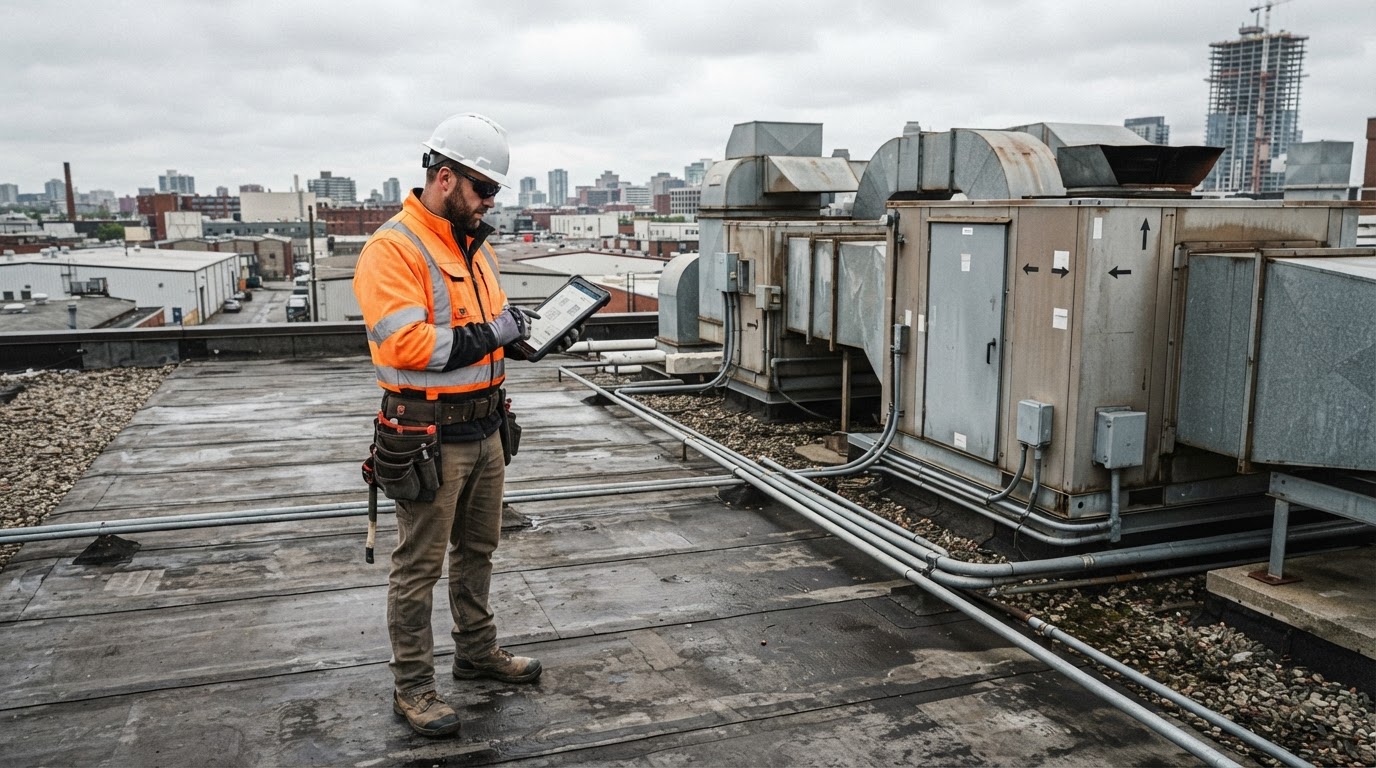
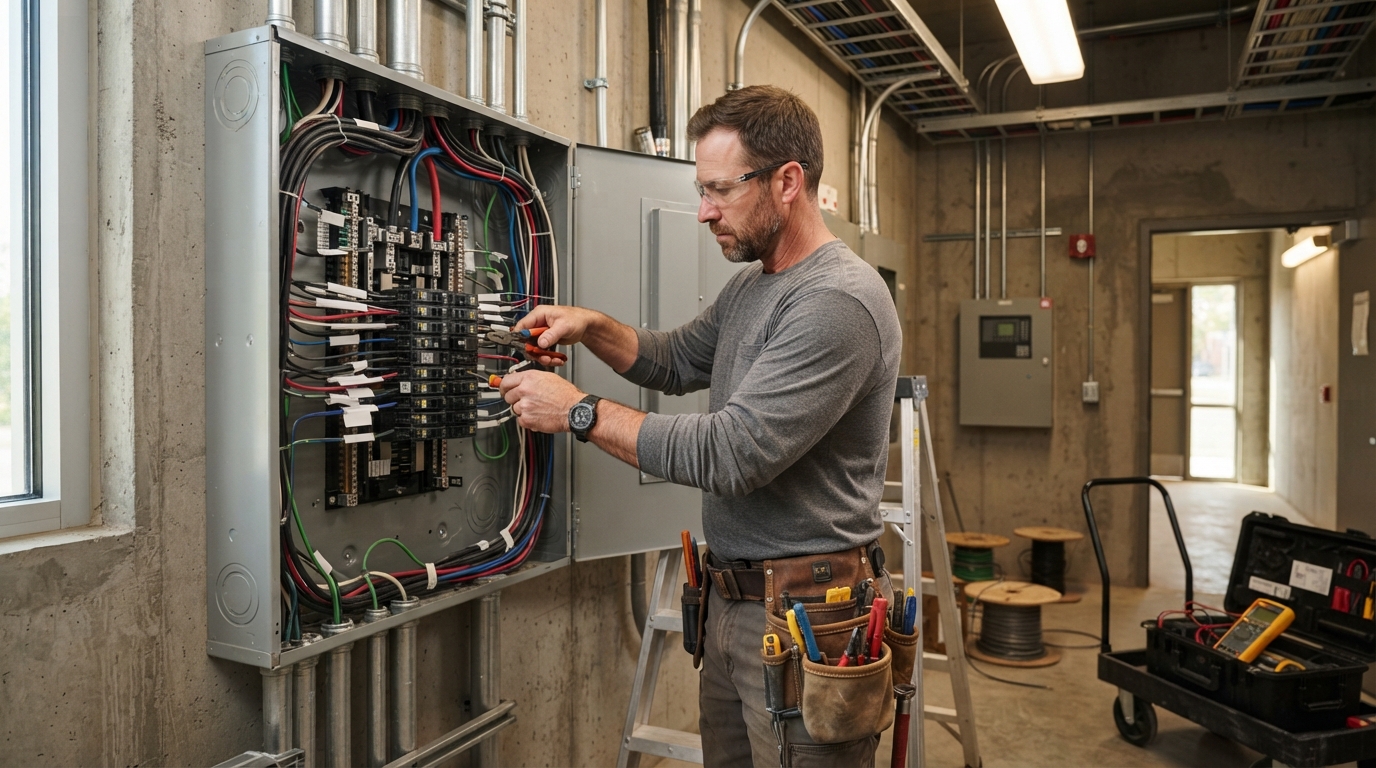
A facility manager at a multi-tenant office building needs a panel upgrade. They search "commercial electrician near me," call the first two companies that appear, and hire whoever responds first with a professional answer. A general contractor needs a reliable electrical sub for a tenant build-out. They ask their network for recommendations, then follow up with whoever gets back to them the same day. A multi-site operator needs preventative maintenance across six locations. They email three contractors and compare who responds with the most organized proposal.
These are the buyers commercial electrical contractors serve. The work is technical, the contracts are valuable, and the relationships are long-term. But every one of these opportunities starts the same way: an inquiry that needs a fast, professional response. This guide walks through a practical lead generation system for commercial electrical contractors — covering positioning, local visibility, paid channels, referrals, qualification, estimate follow-up, and pipeline tracking — without fabricated statistics or guaranteed outcomes.
Who Buys Commercial Electrical Services
Understanding who your buyers are shapes how you position your business, where you invest in visibility, and how you follow up.
- Facility and property managers — They need responsive contractors for panel upgrades, lighting retrofits, troubleshooting, and code compliance. They value reliability and clear communication.
- General contractors — They need dependable subs for new construction, tenant build-outs, and renovations. They value on-time delivery, clean work, and accurate pricing.
- Multi-site operators — Retail chains, restaurant groups, and property portfolios need consistent service across locations. They value a single point of contact and organized scheduling.
- Property developers — They need electrical infrastructure for new builds. They value technical expertise and competitive bids.
Each buyer type has different timelines, budgets, and decision processes. Your lead generation system should speak to all of them, but your follow-up should adapt based on who the inquiry is from and what they need.
Positioning Your Business for the Right Opportunities
Before investing in any lead channel, make sure your positioning is clear. A vague message attracts vague inquiries. A specific message attracts the right ones.
Ask yourself: What types of commercial electrical work do you want more of? What types do you want less of? What is your typical project size? What geographic area do you serve well?
Use the answers to sharpen your website, your Google Business Profile, your ad copy, and your follow-up messages. If you specialize in tenant build-outs, say so. If you serve multi-site operators, highlight that. If you focus on industrial work, make that visible. Clear positioning helps the right buyers self-select and reduces time spent qualifying inquiries that were never a fit.
Local SEO for Commercial Electrical Contractors
When facility managers and GCs need an electrician, they search locally. Local SEO helps your business appear in those searches.
Google Business Profile
Set up and optimize your Google Business Profile as a service-area business. Choose accurate primary and secondary categories (e.g., "Electrician," "Commercial Electrician"). Write a clear business description that mentions your commercial focus. Add photos of your work — not stock images. Keep your NAP (name, address, phone) consistent across all listings.
Service and Coverage Pages
Create pages that describe the specific commercial services you offer (panel upgrades, lighting retrofits, tenant build-outs, preventative maintenance). Create coverage pages for the areas you serve — not cloned city pages with swapped names, but genuine pages that describe your experience and availability in each market. See our service areas for an example of how this can work.
Reviews and Proof
Reviews from facility managers and GCs carry significant weight. Ask for reviews after completed projects — without incentives or gating. Showcase project photos and case studies (with client approval) on your website. Proof builds trust before the first call.
Google Ads Considerations
Google Ads can put your business in front of active buyers searching for commercial electrical services. But without structure, ad spend can be wasted on residential or job-seeker clicks.
Campaign Structure
Separate commercial and residential campaigns. Use ad groups organized by service type (panel upgrades, lighting retrofits, tenant build-outs). Use commercial-specific keywords and add residential terms as negatives.
Geographic Targeting
Target the areas you actually serve. If you work across a metro area, set geographic targeting accordingly. Do not target areas where you cannot respond or serve reliably.
Landing Page Alignment
Send ad traffic to a dedicated landing page — not your homepage. The page should match the ad message, describe the service, and offer a clear way to request a quote or call. Include a form and a phone number. Track which leads come from ads so you can measure return on spend.
Referral and Partner Channels
Many commercial electrical contracts come through relationships, not search. Build referral channels proactively:
- General contractors — Introduce yourself to GCs who need reliable electrical subs. Follow up regularly. Deliver on time.
- Property managers — Connect with property management companies that need ongoing electrical service. Offer a quick-response agreement.
- Complementary trades — HVAC, plumbing, and low-voltage contractors often share project opportunities. Build reciprocal referral relationships.
- Existing clients — After a successful project, ask for a referral. A simple, timely request works better than a complex program.
Referral channels take time to build but produce high-quality opportunities. Track where each lead comes from so you know which channels are worth investing in.
Qualifying Inquiries Early
Not every inquiry is worth pursuing. Some callers have a budget that does not match your work. Others need a residential service you do not provide. Qualifying early saves time for both you and the prospect.
Key Qualification Questions
- What type of property is it? (Office, retail, industrial, multi-site)
- What is the scope of work? (Panel upgrade, lighting retrofit, new construction, maintenance)
- What is the timeline? (Emergency, scheduled, planning phase)
- Is this a bid opportunity or a direct hire?
- Who is the decision-maker?
A simple qualification process — whether handled by a person, a form, or an automated intake — helps you prioritize follow-up and avoid spending time on inquiries that will not convert.
Estimate Follow-Up
For many commercial electrical contractors, the gap between sending an estimate and getting a decision is where opportunities are lost. The prospect receives multiple bids. Days pass. Your estimate sits in their inbox. They go with whoever followed up.
A Simple Estimate Follow-Up Sequence
- 1Day 1 (Email): Send the estimate with a clear summary and next steps. Offer to walk through it by phone.
- 1Day 3 (Phone or SMS): "Hi [Name], following up on the estimate we sent for [project]. Do you have any questions? Happy to walk through it."
- 1Day 7 (Email): "Wanted to check in on the estimate for [project]. We are holding pricing through [date]. Let me know if you need any adjustments."
- 1Day 14 (SMS): "Hi [Name], just checking in. Is the [project] still moving forward? We would be glad to adjust scope or timing if needed."
This sequence is not about pressure. It is about making it easy for the prospect to say yes, ask a question, or tell you the project is on hold. The same automated follow-up principles that work across commercial service businesses apply here — consistency matters more than frequency.
Tracking Your Pipeline
A simple pipeline helps you see where opportunities are and where they are stalling. You do not need complex software — even a basic CRM with clear stages works.
Suggested Pipeline Stages
- New Inquiry — Initial contact received
- Qualified — Fit confirmed, scope understood
- Estimate Sent — Proposal delivered
- Follow-Up Active — Sequence running
- Won — Contract signed or work scheduled
- Lost — Opportunity closed (track the reason)
Track the source of each lead, the stage it reaches, and how long it stays there. Over time, patterns emerge: maybe Google Ads leads close faster, or referral leads have higher value, or estimates sit too long in follow-up. This data helps you improve. See the results we track for examples of what to measure.
30-Day Action Plan
**Week 1: Positioning and Visibility**
- Clarify your positioning and update your website homepage and service pages.
- Audit your Google Business Profile — categories, description, photos, NAP.
- Identify your top three buyer types and write a one-sentence value proposition for each.
**Week 2: Channels and Qualification**
- Set up or refine your Google Ads campaign with commercial-specific structure.
- Define your qualification questions and add them to your intake process.
- Reach out to five GCs or property managers in your network.
**Week 3: Follow-Up and Pipeline**
- Build your estimate follow-up sequence (email + SMS + phone).
- Set up pipeline stages in your CRM or tracking tool.
- Begin tracking lead source for every new inquiry.
**Week 4: Review and Refine**
- Review two weeks of pipeline data. Where are opportunities stalling?
- Adjust your follow-up timing or messaging based on what you see.
- Ask two recent clients for reviews on Google.
Implementation Checklist
- [ ] Positioning statement written and visible on website
- [ ] Google Business Profile optimized as service-area business
- [ ] Service and coverage pages created or updated
- [ ] Google Ads campaign structured for commercial intent
- [ ] Qualification questions defined and integrated
- [ ] Estimate follow-up sequence built and tested
- [ ] Pipeline stages configured
- [ ] Lead source tracking active
- [ ] Referral outreach to GCs and property managers started
- [ ] Review request process in place
Getting Started
Lead generation for commercial electrical contractors is not about one tactic. It is about building a system that responds consistently, qualifies intelligently, follows up reliably, and tracks every opportunity from inquiry to signed contract. The contractors who win are not always the cheapest or the most technical — they are often the ones who respond first, communicate clearly, and stay organized.
If you want help building and managing this system, explore our automation capabilities, review the results we track, browse our service areas, or contact us to request a Free Lead-Loss Audit and see where commercial electrical opportunities may be slipping through the cracks in your current process.